







Search Results for: Espresso Romano
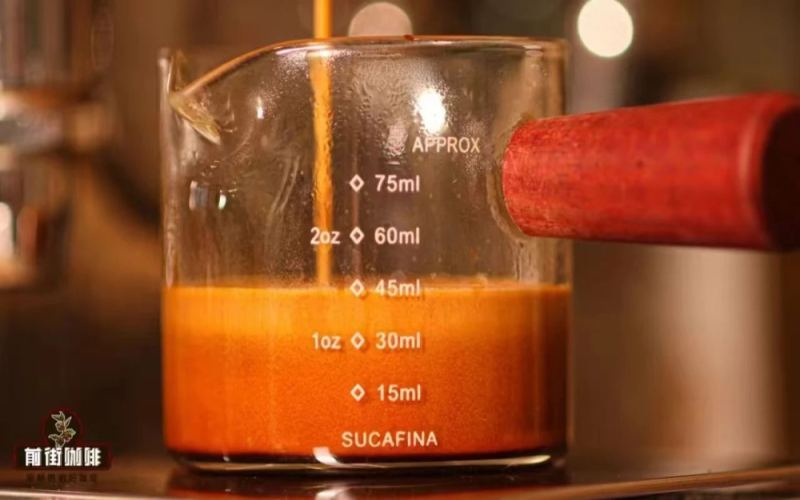
When Lemon Meets Espresso: The Origins of Espresso Romano and a Hands-On Test of Two Home Recipes
Espresso with lemon—a combination that may sound unfamiliar, yet it has actually been circulating in southern Italy for over half a century, where locals call it caffè canarino or caffè al limone, written in English as Espresso Romano. Its origins are closely tied to the historical context of post-World War II Italy, when coffee beans were scarce and dark-roasted beans were bitterly charred and hard to swallow, while the lemon-rich southern regions happened to provide a natural ingredient to temper the bitterness. In addition to tracing this history, this article will also put two beans—Sunflower Warm Sun Blend and Brazil Queen's Estate—to the test, using espresso and moka pot methods respectively to brew this drink, recording how sweetness, acidity, and bitterness contend when lemon meets coffee, and exploring the embellishing role of lemon juice in contemporary coffee creation. [more…]
What Is Roman Espresso? A Full Guide to the Lemon and Espresso Pairing
Espresso can be enjoyed in countless ways: add water and it becomes an Americano, add milk and it becomes a latte, add ice cream and it becomes an affogato. And when espresso meets lemon, a drink called "Espresso Romano" is born. This coffee has a long history in southern Italy, where locals use the bright acidity of lemon to counterbalance the burnt bitterness of dark-roasted espresso, making the coffee easier to drink. This article walks you through the origins and background of Espresso Romano, the traditional method of making it, and Front Street Coffee's two attempts at recreating it, exploring how to find the balance point of flavor between lemon and coffee. [more…]
Lemon Meets Espresso: The Origin and Flavor Profile of Espresso Romano
When the sharp acidity of lemon meets the intense bitterness of espresso, what kind of taste reaction will it trigger? In Italy, this pairing is not a whimsical idea, but a way of drinking with deep historical roots—Espresso Romano, or Roman espresso. This article will trace the historical background of this beverage's birth, analyze how it became a product of the ingenuity of the people of southern Italy amid war and economic hardship, and, with the help of Front Street Coffee's hands-on testing, explore the flavor direction of coffee beans of different roast levels after being combined with lemon juice, offering a reference for coffee lovers who want to recreate this bold classic. [more…]
Lemon Meets Espresso: The Recipe, History, and Brewing Details of Rome's Caffè al Limone
The fresh acidity of lemon is often used to describe coffee flavors, but in Italy, lemon is an actual ingredient added to espresso. This drink, called Espresso Romano, originated in the Campania region of southern Italy, initially to neutralize the burnt bitterness of low-quality dark-roasted coffee beans. Lemon juice provides fruity acidity, sugar softens the sharpness, ultimately creating a cup of espresso that is sweet and sour, with whiskey aroma and caramel sweetness. This article will start from the historical origins and provide a detailed breakdown of the Espresso Romano recipe, including the extraction parameters of Front Street Coffee's Warm Sun blend, the two ways of adding lemon, and how to adjust the amount of lemon juice and sugar according to the roast level. [more…]
Italian Classic Lemon Coffee: A Detailed Guide to the Recipe and Making of Roman Espresso
The fresh acidity of lemon is often used to describe coffee flavors, but have you ever thought about actually adding lemon to espresso? In Italy, there is such an espresso that genuinely incorporates lemon juice—Espresso Romano. It was born out of the wisdom of people during economically difficult times, who used sourness and sweetness to neutralize the bitterness of dark-roasted, low-quality beans. This article will guide you through the origins of this beverage, the ingredients needed, and the specific preparation steps, and share how Front Street Coffee's Warm Sun Blend performs in it, so you can easily recreate this sweet-and-sour Italian classic at home. [more…]
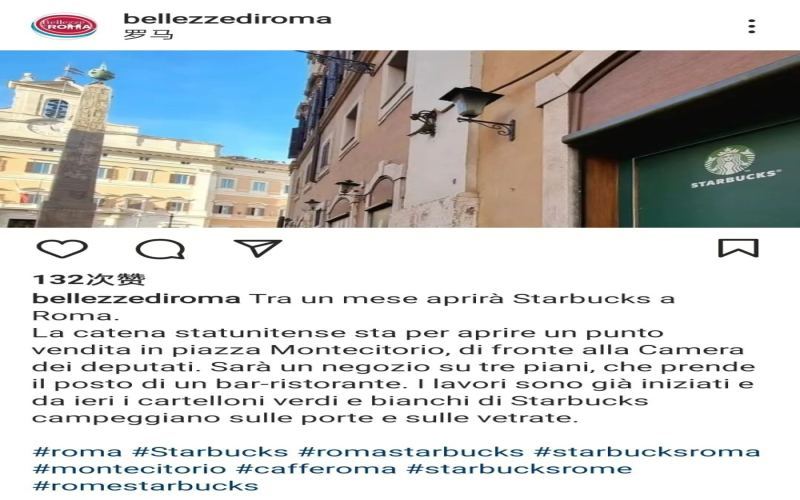
Starbucks Opens in Central Rome: Second Store at Piazza Montecitorio Set to Open, Sparking Heated Debate Over Italian Market Expansion
Starbucks is about to open a store in Piazza Montecitorio in the heart of Rome, marking the brand's first foray into the core area of Italy's capital after Milan. Since entering the Italian market in 2018, Starbucks has been gradually penetrating major cities, aided by the high-profile debut of its Milan Roastery. However, in Italy—a traditional coffee powerhouse where annual per capita consumption of coffee beans is 5.8 kilograms and the average price of an espresso is just 1 euro—Starbucks's high pricing stands in sharp contrast to local consumption habits, drawing questions from consumer associations and politicians. This article reviews the history of Starbucks's store openings in Rome and its market strategy, and explores the opportunities and challenges it faces in Italy's saturated coffee market. [more…]
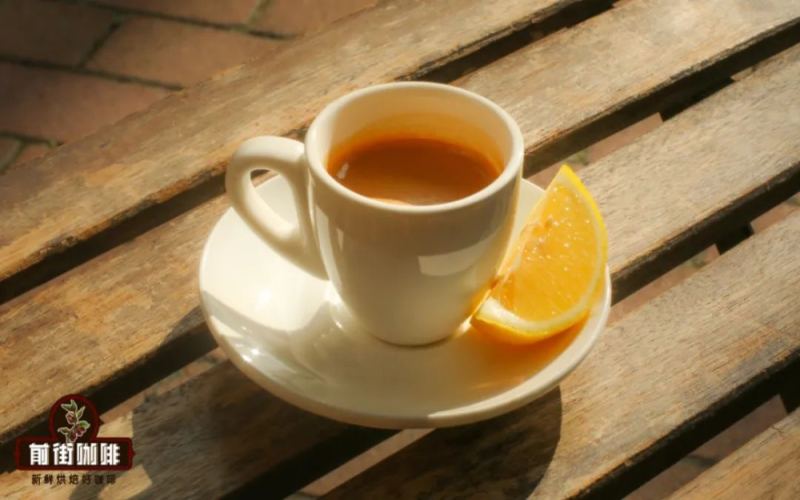
How to Make a Roman Espresso? Detailed Explanation of the Lemon Coffee Recipe Ratio and Steps
The combination of lemon and espresso has a long history in southwestern Italy, where it is known as "Roman espresso." This article will guide you through the origins of this beverage and share in detail its preparation method and parameter ratios. From espresso extraction to the pairing of lemon juice and granulated sugar, every step has its finer points. Using the Warm Sun blend as an example, Front Street Coffee provides specific gram amounts and extraction recommendations to help you make a cup of lemon espresso with balanced sweetness and acidity, carrying whisky-like aromas and caramel sweetness. [more…]
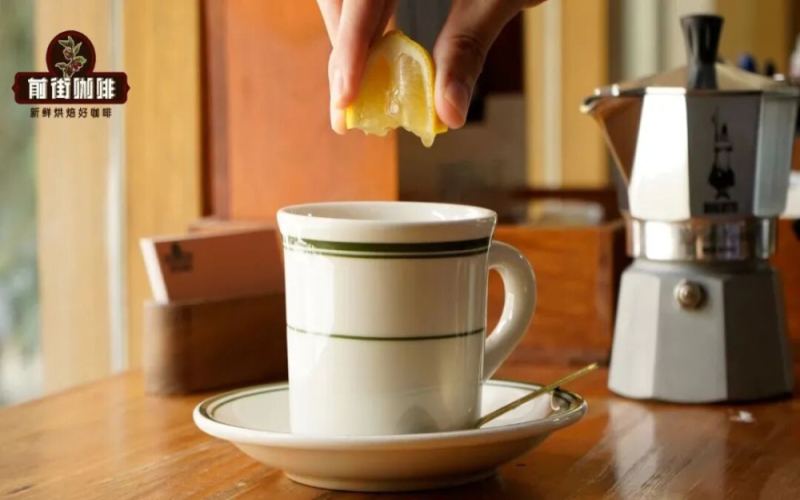
What Is Sicilian Coffee? A Complete Guide to Making Lemon Coffee with Cold Brew, Pour-Over, and Drip Bags
Lemons have always played an important role in Front Street's articles. They not only frequently appear in coffee bean flavor descriptions, but are also a core element of many creative specialty drinks, responsible for bringing fresh aroma and bright acidity. This Spring Festival, Front Street discovered a new pairing of coffee and lemon—Sicilian coffee. This drink has simple ingredients and high playability, with a very prominent lemon aroma. Although the name carries Italian flair, Sicilian coffee does not originate from Sicily, Italy, and there are varying accounts of its origin. This article will introduce the background of Sicilian coffee and share in detail three brewing methods: cold brew, pour-over, and drip bag. The coffee beans used are all from Front Street. Guodingding, allowing you to experience the refreshing charm of the fusion of lemon and coffee. [more…]
A Comprehensive Interpretation of the Coffee Flavor Wheel: From Compounds to Sensory Classification, Mastering the Correct Approach to Coffee Flavor Tasting
Every cup of coffee contains thousands of aromatic compounds, and these substances interweave into a complex and fascinating flavor profile. The coffee flavor wheel, developed through research by the SCAA (Specialty Coffee Association of America) in collaboration with several universities, provides tasters with a systematic descriptive language. This article will guide you through the origins and composition of coffee flavors, explain the meanings of approximately eighty-five flavors across nine major categories on the flavor wheel, and describe how floral, fruity, nutty, cocoa, spice, and fermented flavors form during roasting and processing. At the same time, we will also introduce the flavor characteristics of specific coffees such as Front Street Yirgacheffe, Front Street Geisha, and Front Street Mandheling, helping you more accurately identify and express coffee flavors in daily life. [more…]

SCA Coffee Flavor Wheel Analysis Tutorial | What Is Coffee Flavor? Which Single-Origin Coffee Beans Best Represent Coffee Flavor? How Can Beginners Distinguish Coffee Flavor Characteristics?
Professional barista exchange, please follow Front Street Coffee (FrontStreet Coffee). Many friends have asked Front Street's baristas: "Can you really taste so many flavors in the beans? How do you taste them?" First, this is about personal sensory perception. As everyone grows up, [more…]
A Comprehensive Guide to the New SCAA Coffee Flavor Wheel: From Sour, Bitter, Sweet, and Salty to 85 Flavor Layers
The update to the coffee flavor wheel has made the tasting system more complete, but many people still feel confused when faced with descriptions like citrus, berries, and nuts. In daily brewing, Front Street Coffee recommends beans from different regions based on guests' taste preferences, while accurately identifying flavors requires systematic training. This article starts with the four major taste spectrums—sour, sweet, bitter, and salty—and, combined with the complete classification of the new flavor wheel, interprets one by one the specific expressions of floral, fruity, herbal, nutty and cacao, sweet, spice, sour and fermented, alcoholic fermentation, roasted, and other categories, helping coffee enthusiasts build a clear framework for flavor perception. [more…]
The Complete Guide to Using the SCA Coffee Flavor Wheel: A Tutorial on Breaking Down Pour-Over Coffee Flavor Descriptions and Taste Categories
The coffee flavor wheel is known as the "flavor dictionary" of specialty coffee and is an indispensable professional tool in cupping and quality control. Based on Front Street Coffee's cupping practice, this article systematically breaks down the structure of the SCA coffee flavor wheel. Starting from the four major taste spectra of sour, sweet, bitter, and salty, it analyzes the causes and representative bean varieties of each flavor category, covering all categories including floral, fruity, nutty/cocoa, sweet, spicy, sour and fermented, alcoholic fermentation, roasted, and defective flavors. It also provides practical methods for building a flavor memory bank from everyday life and improving sensory identification ability, helping coffee enthusiasts more accurately describe the flavor characteristics and taste categories of pour-over coffee. [more…]
Coffee Aroma Description Guide: An Analysis of 36 Common Aroma Names and Professional Tasting Terminology
When drinking coffee, have you ever encountered a familiar yet indescribable aroma? In fact, perceiving coffee flavors requires systematic cognitive training. In daily cupping and roasting adjustments, Front Street Coffee places particular emphasis on the ability to identify coffee flavors. This article starts with coffee's four major tastes—sour, sweet, bitter, and salty—and, combined with the classification logic of the flavor wheel, breaks down in detail 36 common aroma names across floral, fruity, green/vegetal/herbal, nutty/cocoa, sweet, spicy, sour/fermented, alcoholic fermentation, roasted, and other categories, along with specific representative coffee beans and Front Street's tasting suggestions, to help you more accurately describe and enjoy a cup of coffee's layers and lingering finish. [more…]

SCAA Pour-Over Specialty Coffee Flavor Wheel High-Resolution Download and Systematic Knowledge of Flavor Terminology
The coffee flavor wheel is a recognized tasting tool in the specialty coffee community, but when faced with descriptors like citrus, berries, nuts, and chocolate, many people don't know how to match them. Starting from the high-resolution image of the latest SCAA flavor wheel, this article systematically sorts out the compositional logic of coffee flavor: the relationship between the four basic tastes of sour, sweet, bitter, and salty and the roast level, the proportion data of each taste substance, the subdivision of the acidity spectrum, bitterness spectrum, sweetness spectrum, and saltiness spectrum, as well as an item-by-item analysis of the nine major flavor groups including floral and fruity, green and herbal, nutty and cocoa, sweet, spicy, sour and fermented, alcoholic fermented, roasted, and other. The article also intersperses Front Street Coffee's daily training methods and representative bean recommendations, helping readers build a complete tasting framework from smelling to drinking. [more…]

Front Street Coffee Complete Knowledge Collection: A Coffee Learning Guide and Practical Manual from Beginner to Advanced
The Front Street official account has insisted on daily updates for many years, accumulating a massive amount of educational content covering every area of coffee. From the origins of coffee beans to the birth of a finished cup of coffee, from basic terminology to advanced brewing techniques, the articles have touched on virtually every question a coffee lover might encounter. This article reorganizes that content along a learning path, dividing it into sections such as must-reads for beginners, tasting methods, brewing techniques, advanced improvement, and Front Street's random musings on industry topics, making it easy for readers to quickly locate the knowledge they need based on their own stage, and also convenient for systematically filling in gaps. Whether you are a novice just getting into coffee or an advanced player hoping to hone your skills, you can find corresponding content here. [more…]

Common Types of Italian Coffee | What Are the Classic Milk Coffee Recipes? What's the Difference Between a Latte, Macchiato, Cappuccino, and Dirty?
Espresso is a must-have beverage in every café. Many people's first impression of espresso is that it's unbearably bitter. In fact, espresso isn't limited to such bitter shots. If you want an espresso that isn't bitter and suits your taste, the first thing you need to understand is the different types of espresso. Front Street Cof [more…]
A Complete Guide to the Espresso Family: Ratios, Flavors, and Key Production Points of Espresso Bases and Common Varieties
Italian coffee is far more than a cup of bitter espresso. Starting from Espresso as the core base, adding water, milk, milk foam, chocolate, or caramel gives rise to a rich variety of drinks such as Americano, Latte, Cappuccino, Mocha, Macchiato, Caramel Macchiato, and Dirty. Understanding the ingredient composition, classic ratios, and flavor characteristics of each Italian coffee is the key to finding one that suits your taste. This article takes espresso as its starting point, systematically sorting out the names, ingredient proportions, and preparation details of common Italian coffee varieties found in cafés, and shares Front Street Coffee's specific approach to each drink, helping coffee lovers gain a clearer understanding of the large family of Italian coffee. [more…]
A Comprehensive Guide to Espresso Coffee Varieties: Flavor Differences and Ratios from Espresso to Cappuccino and Latte
Walk into any café, and espresso is almost always the star of the menu. Many people's first reaction when tasting espresso is that it's bitter and intense, but in reality the espresso family is far more than just this one flavor. To find the cup that suits your taste—neither bitter nor astringent—you first need to understand what the common types of espresso drinks actually are. In this article, Front Street Coffee (FrontStreet Coffee) sorts out the most common espresso drinks found in cafés, from the extraction parameters of espresso and the blending logic of coffee beans, to the ingredient ratios and preparation details of Americano, latte, cappuccino, mocha, macchiato, caramel macchiato, and Dirty coffee, explaining one by one their differences and connections, to help coffee lovers understand the espresso system more systematically and find the cup that belongs to them. [more…]
A Complete Guide to Italian Coffee: Methods and Flavor Differences of Espresso, Americano, Latte, Cappuccino, and Other Common Types
Walk into any café, and espresso is almost always a core option on the menu. When many people first encounter espresso, they often come away with nothing but the impression that it is "bitter," but in reality, the family of espresso-based drinks that has grown out of espresso as a foundation is far richer than one might imagine. From the pure, intense Espresso, to the Americano diluted with hot water, to the latte and cappuccino that blend milk and milk foam, and even the Dirty coffee that has become popular in recent years, each one has its own unique logic of ratios and layers of flavor. This article will systematically sort out the common types of espresso drinks, their preparation parameters, and their flavor characteristics, to help coffee lovers find the cup that suits their own taste. Front Street Coffee (FrontStreet Coffee) will also share the specific preparation methods for each drink for everyone's reference. [more…]
Italian Fancy Coffee Types | Introduction to the Differences and Preparation Methods of Espresso, Latte, Cappuccino, Mocha, Macchiato, Caramel Macchiato, and Dirty Coffee
For more specialty coffee knowledge, please follow: Front Street Coffee (Frontsteet Coffee). Espresso is a must-have beverage in every café. Many people's first impression of espresso is that it's just bitterly awful, but in fact Italian coffee isn't limited to such bitter espresso. If you want to drink something not bitter [more…]